

Article
If Indigenous land and water dispossession is ignored, climate adaptation strategies risk reproducing inequalities and worsening acute climate vulnerability.
Frederic Wehrey, Charles H. Johnson
Source: Getty
The coming decade will require technology companies to decide how nuclear fits into their energy strategies—and grapple with the obligations that follow.
Electricity demand is rising rapidly, along with growing enthusiasm for nuclear power. In addition to climate concerns and the desire for secure energy, these needs are driven in large part by the planned expansion of data centers for artificial intelligence and cloud computing. The United States is home to the world’s largest data center market and the leading global cloud service providers, including Alphabet (Google), Amazon, Meta (Facebook), and Microsoft. These firms—or “hyperscalers”—design, build, and operate massive data center facilities that support skyrocketing AI demands, but require large amounts of firm, scalable, and always-available power. This puts new pressure on electricity grids already facing capacity, reliability, and affordability challenges.
As technology companies pursue aggressive AI buildouts, they are seeking innovative ways to meet their energy demands. Nuclear power has thus entered the conversation as one of the few energy sources capable of delivering the kind of firm, high-density electricity that data centers need while simultaneously allowing companies to maintain public climate commitments.1
The entry of hyperscalers into a rapidly evolving nuclear energy market introduces new dynamics to what has been a highly regulated and slow-moving industry. Since 2024, a series of high-profile agreements have been announced between hyperscalers and nuclear utilities, vendors, and reactor designers. These deals signal enthusiasm for the sector, but it is still unclear whether big tech is willing to make big bets on nuclear power.
This paper explores how large U.S. technology companies are approaching nuclear power in the context of their energy strategies to meet the escalating demands from AI. The first section describes the approaches hyperscalers are using to secure nuclear energy. To date, their efforts reflect their preference to be energy offtakers (customers) over direct nuclear ownership or project development. The second section then assesses why these approaches have remained cautious, considering factors such as priorities, timing, and costs. Additionally, it considers key entanglement risks that big tech will need to confront including potential reputational exposure, nonproliferation concerns, and management of long-term nuclear waste.
Large technology companies are approaching nuclear energy utilization via two main pathways: power purchase agreements (PPAs) and direct partnerships with relatively new companies that are developing smaller reactors. The former is an agreement in which a buyer commits to a fixed-price, long-term contract with a power generator to buy electricity—whether from existing or planned nuclear power plants. In contrast, direct partnership deals have been varied and the details opaque, but they can generally be considered venture capital moves, allowing hyperscalers to take a stake in future opportunities as new nuclear options become available.
Hyperscalers’ nuclear technology interests have ranged from traditional, large-scale, light-water reactors to novel, next-generation (Generation IV) advanced reactor systems. Some are concentrating on low-hanging fruit: buying power relatively quickly from currently operating nuclear power plants or enabling the extension or restart of legacy reactors with decades of proven electricity production. Other firms are making longer-term bets, mainly on the buildup of small modular reactors (SMRs) that are intended to be easier, cheaper, and safer to deploy, but which face significant development and construction barriers due to their first-of-a-kind nature. Several hyperscalers are also hedging their bets on nuclear fusion as a future energy option, which could begin to enter the mix by the mid-2030s.2
The emerging wave of hyperscaler-backed deals signifies a broader and more diverse set of actors involved in nuclear power.
The emerging wave of hyperscaler-backed deals signifies a broader and more diverse set of actors involved in nuclear power. Traditionally, the nuclear industry in the United States has been dominated by major utilities, a handful of established reactor vendors and technology providers, and fuel services suppliers, all operating within a highly regulated framework. Utilities have typically owned and operated nuclear power plants, while reactor vendors designed and supplied the technology.
In addition to deals with traditional utilities and vendors, technology companies are also now partnering with startup firms that are developing small and advanced reactors as well as nuclear developers that are seeking to site, finance, and build new nuclear capacity in a “one-stop shop” model. Thus, there are many more models as well as stakeholders that could be involved in future nuclear power deployment compared to the past.
From the hyperscaler perspective, these differences in reactor preferences, contractual arrangements, and partnerships reflect the varying levels of technological, financial, and reputational risk. As a result, deal structures vary widely, ranging from relatively straightforward PPAs with large utilities to more speculative, long-term arrangements with developers and advanced designers. Some arrangements include connecting new power sources to existing transmission grids, while others may ultimately be “behind-the-meter,” that is, produced onsite directly for the customer.
As shown in figure 1, the announced agreements to date for nuclear power could provide up to 13 gigawatts (GW) in total, split roughly equally between PPAs and direct partnerships. The following sections describe in more detail the varying approaches being taken by these technology companies to secure nuclear energy.
The “big four” hyperscale-level technology companies—Alphabet, Amazon, Meta, and Microsoft—have each signed PPAs with utilities that own and operate nuclear power plants. Meta and Microsoft are funding the extension or restart of existing nuclear power plants, while Amazon and Alphabet have tied their PPAs to the development of small modular reactors and next-generation reactor technology. Taken together, these arrangements could provide about 6.9 GW of nuclear energy by the early 2030s. This is summarized in Table 1.
Alphabet, Kairos Power, and public electric utility Tennessee Valley Authority (TVA) have an agreement in which TVA will buy up to 50 megawatts (MW) of electricity from Kairos Power’s advanced molten-salt-cooled reactor, Hermes-2, currently being developed in Oak Ridge, Tennessee. This electricity will be supplied to the TVA grid, helping to power Alphabet’s data centers located in Montgomery County, Tennessee, and Jackson County, Alabama. The reactor is expected to begin operating in 2030. This partnership represents the first U.S. utility power purchase agreement to feature a Generation IV reactor.3
This PPA also marks the beginning of the 2024 Google-Kairos “Master Plan Development Program,” which aims to launch a portfolio of advanced nuclear power projects reaching a total capacity of 500 MW by 2035. Kairos will be responsible for developing, building, and operating the reactors, while Google will commit to purchasing energy, ancillary services, and environmental benefits through these PPAs.4 The U.S. Nuclear Regulatory Commission has already granted construction permits, allowing Kairos to start work on nuclear safety infrastructure for Hermes—an important regulatory step for demonstrating a Generation IV advanced reactor in the United States.5
In June 2025, Amazon and Talen Energy announced an agreement to supply nuclear power for AWS cloud technologies. Previously, Amazon had acquired Talen’s existing data center campus in Pennsylvania and proposed a behind-the-meter interconnection service to the nearby Susquehanna nuclear power plant; however, this proposal was declined by the Federal Energy Regulatory Commission (FERC) in November 2024. FERC argued that the interconnection agreement did not adequately protect ratepayers from unfair cost shifts.6 The 2025 iteration of the deal will transition transmission to a “front-of-the-meter” configuration, thereby maintaining energy within the standard electricity grid, which does not require FERC approval. This arrangement allows Amazon to access the full contractual amount of 1.9 GW until 2042, with options available to extend.
Rather than selling energy on the competitive wholesale power market—where power is sold by generators to end-users, such as utilities and retail energy suppliers—Talen now has about half of its output secured through long-term contracts, reducing the risks from market fluctuations and lessening dependence on federal Production Tax Credits.7 The ramped schedule for delivering power in this agreement is expected to reach full volume by 2032, and if fulfilled, it could provide Amazon with the flexibility to expand as its energy needs grow.
Beyond this PPA, Amazon and Talen are reportedly considering the development of new SMRs, which could boost Susquehanna’s current output to the grid. While specific plans for these SMRs have not been disclosed, Amazon has other deals in place with X-energy and Energy Northwest for advanced reactor development, described in the upcoming investor section.
Meta has entered a twenty-year PPA with Constellation Energy for 1,121 MW power from the Clinton Clean Energy Center (CCEC) in Illinois, which had previously been slated for shut down in 2027 for financial reasons. Under this agreement, Meta is not buying electricity for its data centers—power will continue to be sold and delivered to the regional market. Instead, it is purchasing the plant’s clean energy credits, enabling the company to count Clinton’s carbon-free generation toward Meta’s 100-percent-renewable energy target. Even so, Meta’s long-term commitment to CCEC provided the economic certainty needed by Constellation to reverse shutdown plans and renew its own twenty-year operating license from the Nuclear Regulatory Commission.
Keeping the reactor in operation may help to avoid political or regulatory issues that otherwise could arise from grid disruptions or co-location. Since the deal doesn’t change the source of power, it won’t need approval from state or federal regulators.8
In January 2026, Meta announced a separate twenty-year PPA with Vistra for 2.6 GW of energy from life extensions and uprates at existing nuclear plants in Ohio and Pennsylvania.9 Specifically, the agreements include 2,176 MW of operating generation and an additional 433 MW of combined power output increases. This deal is contingent on Nuclear Regulatory Commission approval for the life extensions and expansions, but the assured demand from the long-term PPA should help support those actions. Financial details of this arrangement were not publicly disclosed.
In September 2024, Microsoft announced its own twenty-year PPA with Constellation Energy—the utility’s largest nuclear power purchase agreement. This deal will restore and restart Unit 1 of the Three Mile Island nuclear power plant in Pennsylvania, which shut down in 2019 due to financial challenges. The plant is expected to be renamed the Crane Clean Energy Center and return to service in 2027, adding about 835 MW to the PJM power grid, the regional transmission organization covering thirteen states plus the District of Columbia. The full 835 MW output will be purchased by Microsoft to meet the needs of their data centers in the region.
Although similar to Meta’s agreement with Constellation—purchasing energy from established facilities with proven performance—the effort to restart Unit 1 requires substantial restoration work and close coordination with both state and federal regulators. Constellation, backed by a $1 billion loan from the Department of Energy, intends to invest around $1.6 billion into bringing Unit 1 back online, covering the cost of upgrades to critical operating systems.10 In addition, the project’s success relies on obtaining re-licensing and interconnection approvals, both of which are anticipated to take about three years to process.
The Three Mile Island facility comes with historical baggage. In 1979, a partial meltdown of Unit 2 resulted in minor radioactive releases and dramatically influenced nuclear regulation as well as public perception of the safety of nuclear energy in the United States and around the world. Unit 1, the reactor slated for restart, was unaffected by the incident and operated safely until its closure in 2019; however, the location continues to evoke strong associations with nuclear risk. The renaming of the facility as the Crane Clean Energy Center demonstrates a purposeful rebranding aimed at overcoming this legacy, as Constellation and Microsoft emphasize employment opportunities, carbon-free energy production, and clean-energy leadership. Nonetheless, increased media attention has resurfaced historical concerns.11
Some technology companies are also partnering directly with nuclear power developers and reactor vendors, in addition to utilizing PPAs described in the previous section. The hyperscalers generally seem to prefer buying needed energy through PPAs, which has resulted in restarts, life extensions, and uprates of existing plants described previously. Thus far, their interest has not translated into the financial backing that would be required to generate an “order book” to build a fleet of new reactors.12
These direct partnership agreements reflect divergent approaches among the technology companies. Alphabet, Amazon, and Meta have each entered partnerships with SMR developers; Microsoft has not. Oracle and NVIDIA have also announced nuclear deals involving SMRs.13 While terms are largely undisclosed, the arrangements generally involve modest capital investment, site commitments, or advance energy offtake agreements—structured to support early-stage SMR companies rather than fund construction directly. Critically, these agreements are contingent on technologies that have not yet been commercialized. Once they are, the agreements may transition to essentially become PPAs to buy power once the new reactors are operational. As shown in Table 2, full realization of these commitments could add roughly 6.1 GW of capacity by the mid-2030s—an outcome that depends heavily on whether SMR developers can deliver.
Alphabet has entered into an agreement with Elementl, a nuclear project developer, for the planning, construction, and operation of three reactor sites, with the nuclear technology to be selected later by Elementl. Each site is envisioned to have a capacity of 600 MW, amounting to a total potential output of 1.8 GW. Alphabet has targeted 2035 to have all three projects operational.14
Preparing sites ahead of the technology selection demonstrates Alphabet’s urgency in securing reliable energy, while highlighting the risks associated with uncertain innovations. This suggests that Alphabet is keeping its options open, aiming for flexibility and scalability while tacitly acknowledging uncertainty.
In 2024, through its Climate Pledge Fund, Amazon participated in a $500 million funding round for reactor and fuel design engineering company X-energy. A subsequent round in 2025 increased total financing to $700 million, with Amazon remaining as an anchor investor. The funds will support the completion of X-energy’s SMR design and licensing, as well as the development of future reactor sites, intended in total to bring more than 5 GW of new power projects online by 2039.15
This initial agreement appears to be part of a much larger plan. Together with Energy Northwest, Amazon and X-energy are also collaborating on an SMR project at the Cascade Advanced Energy Facility near Richland, Washington. The first stage will involve the development of four 80 MW X-energy reactors (320 MW total), with construction anticipated to begin by 2030. If successful, additional deployments through 2039 could scale up capacity to almost 1 GW. Figure 1 shows the planned site design.
In August 2025, Amazon struck a strategic partnership with X-energy, Korea Hydro & Nuclear Power Corporation, and Doosan Enerbility to further speed up the use of small modular reactors in the United States. The goal of this agreement is to attract up to $50 billion from both public and private sources for new reactors and their supply chains, which complements a $350 billion trade agreement between the United States and South Korea.16
In early 2026, Meta announced deals with TerraPower and Oklo that, combined, could ultimately add about 4 GW of new power.17 Financial terms of the deals were not disclosed in the announcement. In a press release, Meta noted that this agreement provides “business certainty” allowing them to “raise capital to move forward with these projects and ultimately add more energy capacity to the grid.”18
In 2024, Microsoft stated that it did not have any intention of directly investing in its own nuclear power plants or owning and operating any generation assets.21 Instead, it is working with other companies, such as steel manufacturer Nucor Corporation and Google, to aggregate demand for new nuclear capacity. Assuring demand in this way is intended to encourage nuclear financing and de-risk the projects for developers and investors. Though Microsoft is not currently considering NPP investment, it has hired several senior experts to guide the development of innovative next-generation energy systems for data center infrastructure, including nuclear.22
In addition to the four hyperscalers described above, two other large technology companies have made nuclear-related agreements:
In sum, the PPAs and direct partnership deals to date illustrate both the growing interest of hyperscalers in nuclear energy and the limits of their current engagement. PPAs reflect the preference of large technology companies to be customers, or offtakers, of energy. Locking the energy in over a specified period provides certainty in an energy market in which demand is projected to outstrip supply. Direct partnerships signal interest in future nuclear technologies, but the details remain opaque and the projections for future power generation are highly dependent on new technologies coming to fruition. Across both pathways, a question emerges: given their substantial capital resources and growing energy needs, why are technology companies not making more decisive, large-scale commitments to nuclear power? The following section examines the key factors shaping this hesitancy, including competing priorities, development timelines, costs, and risks.
Developing new nuclear power plants have traditionally been long-term infrastructure projects, taking ten to fifteen years from initial planning to commission. The process involves comprehensive site selection, regulatory approvals, complex construction, and grid interconnection. Even projects that involve restarting previously operating reactors or extending the life of existing units require multi-year regulatory review and upgrades before returning to service. While SMRs and other advanced designs are often promoted as faster and more flexible alternatives to traditional large-scale reactors, few designs have made it to the demonstration phase in the United States, and none are operating at a commercial scale. As a result, these technologies face uncertain development timelines, with additional challenges related to first-of-a-kind manufacturing, licensing, and supply chain and workforce readiness.27
These years-long timelines are fundamentally misaligned with the pace of data center expansion and associated electricity demand. Hyperscalers are deploying new AI infrastructure on a massive scale—as of March 2026, over 700 data centers were under construction in the United States.28 As discussed, these facilities are voracious consumers of energy. Estimates vary widely, with some forecasts suggesting that U.S. data center load could triple or quadruple by 2035, while others project more moderate growth.29 This uncertainty reflects several hard-to-predict factors. Reliance on AI may explode, or public backlash may dampen adoption; current projections may misestimate the ultimate need for energy and computing capacity. Or AI may not become as ubiquitous, and the heady growth projections may be more hype than reality. It is also plausible that advances in semiconductor, software, or cooling technologies could increase processing speed and reduce energy usage.
If all the hyperscaler-backed nuclear projects described in the previous section come to fruition, they would generate roughly 102 terawatt-hours-per-year (TWh/y). However, this would not be enough to meet even the lowest demand case let alone the 560 TWh/yr mid-range linear expansion estimate shown in figure 2. Indeed, these deals would cover less than 20 percent of projected demand through 2035.
Massive investments in data centers are underway that rival past national-level infrastructure efforts.30 Hyperscalers spent $443 billion on data centers in 2025 and are projected to spend over $700 billion in 2026.31
The capital expenditures on data centers are forcing large technology firms to take on an unprecedented, debt‑financed buildout.
The capital expenditures on data centers are forcing large technology firms to take on an unprecedented, debt‑financed buildout. While these companies generally have strong balance sheets and generate enormous cash flow, the scale and speed of AI data‑center construction—combined with rising power, land, construction, and supply costs—has pushed them to rely on bond issuance, leasing structures, and project‑level financing. By late 2025, this shift had reached record levels and had begun to raise concerns among credit investors and economists. Table 3 summarizes recent bond and debt actions by large technology firms.
Such investments in AI infrastructure reflect the intense rivalries between technology companies but leave the firms with significant debt and, thus, less cash to invest in long-term bets like nuclear power. The AI infrastructure race has become existential for hyperscalers as well as AI companies like OpenAI and Anthropic—creating a winner-take-most dynamic in which falling behind on compute capacity risks strategic irrelevance, while overbuilding risks financial ruin. Put simply, hyperscalers are running a sprint to build data centers for AI capacity. Nuclear is a marathon. Signing up for the marathon does not move the sprint’s finish line.
While several SMR projects are in various stages of development, the most recent completed nuclear project—Units 3 and 4 at Georgia’s Vogtle Electric Generating Plant—was finished in 2024, seven years late and more than $30 billion over budget.32 Even small modular reactors, with their smaller footprints and prefabricated designs, face a fundamental economic hurdle: meaningful cost reductions require high-volume manufacturing and supply chains, and specialized workforces to support both construction and operation that have yet to materialize. Renewables and gas-fired plants, by contrast, are getting cheaper and can be deployed much faster.
The numbers reflect this shift. The Energy Information Administration (EIA) reported in February 2026 that developers plan to add over 90 GW in 2026. This is driven by 43.4 GW of new utility-scale solar capacity in 2026—roughly 60 percent more than in 2025. Battery storage is expanding even faster: more than 40 GW was added to the U.S. grid over the past five years, and developers plan to add another 24 GW in 2026 alone. Wind investment has slowed due to supply chain issues and permitting delays but could still contribute up to 11.8 GW this year if planned projects proceed. Natural gas plants were expected to generate 6.3 GW. 33
Figure 3 shows planned grid additions for 2026 contrasted with the new nuclear planned through the mid-2030s. Solar additions planned (43.4 GW) in a single year could more than triple the potential nuclear contributions (13 GW) through the mid-2030s.
Natural gas investment appears to be ramping up, and could see significant growth in the next decade, driven largely by the power demands of AI data centers. An April 2025 compilation of utilities’ integrated resource plans by RMI found 94 GW of gas additions included in long-term plans nationally through 2035.34 For example, Texas is planning roughly 10 GW in new gas capacity at sites in the Permian Basin, Houston, and El Paso, backed by over $5 billion in state loans.35 In December 2025, Georgia’s Public Service Commission approved three new combined-cycle gas plants totaling up to 6 GW of new capacity by 2031—a decision not without dissent: one departing commissioner stated publicly that he would have preferred investment in nuclear over gas.36
Some technology companies are not waiting for grid expansion. Microsoft, Amazon, and other hyperscalers have sought or received permits to build gas generation directly at data center sites in multiple states—a development that could accelerate both the pace and the geographic dispersal of new gas capacity.37
The explosive growth of data centers is increasingly being blamed for higher electricity prices. They need massive amounts of energy, potentially straining electrical grids. These concerns are being exacerbated by the noise that these facilities produce, the limited jobs created after construction is completed, and the intense drain on local water supply for cooling purposes. According to a November 2025 nationally representative survey, 78 percent of U.S. adults polled were somewhat or very concerned that the new data centers being built will make their energy bills go up.38 Such concerns are particularly prominent in Northern Virginia, which has a cluster of data centers. According to a January 2026 survey, nearly three out of four respondents in the region blame data centers for rising electricity costs.39
This “techlash” is becoming a potent political issue in the United States. In December 2025, three U.S. senators launched a probe directly linking the rising costs of electricity with the data center buildout and alleging that technology companies are not paying “their fair share” of electricity costs.40 In March 2026, environmental and faith groups in Georgia asked a judge to review the late 2025 Public Service Commission approval to expand energy capacity to support growth in AI data centers, arguing that the expansion might not be needed and would ultimately drive up electricity costs for ratepayers.41
To address such concerns, the White House issued a Ratepayer Protection Pledge in March 2026. The pledge was signed by the hyperscalers and large AI companies.42 The accompanying proclamation states:
“Today, pursuant to the Ratepayer Protection Pledge, leading United States hyperscalers and AI companies guarantee that data centers’ energy needs will not increase household electricity costs for American citizens. Instead, these companies will build, bring, or buy the new generation resources and electricity needed to satisfy their energy demands, and pay for all new power delivery infrastructure upgrades to service their data centers.”43
The pledge is politically significant but vague and legally toothless, with no enforcement mechanisms. It reiterates what sophisticated utilities and larger hyperscalers were already doing in many cases—and some tech companies described their signature as affirming a “long-held commitment” rather than a new obligation.44 Nuclear is not directly mentioned in the pledge.
Amid the techlash, the broader political and policy environment in which nuclear operates has been shifting substantially in recent years—enough that the medium-term picture looks meaningfully different from the short-term one. A convergence of factors is creating conditions in which a genuine nuclear expansion is plausible for the first time in decades. Understanding what those conditions are, and what they will require to be sustained, is essential to evaluating the role that technology companies will play in the energy future they are helping to shape.
For much of the past fifteen years, nuclear power operated under a political shadow cast by the March 2011 accident at the Fukushima Daiichi plant in Japan. Support for nuclear power peaked at 62 percent in 2010 before falling sharply and staying depressed for most of the decade. That decline has now reversed. By 2025, 61 percent of U.S. adults favored nuclear power—just one point below the all-time high.45 The recovery has been notably broad-based, crossing partisan lines in a political environment where few energy issues command bipartisan support.46 State activity supporting nuclear energy reached unprecedented levels in 2025 and early 2026, marking a clear transition from exploratory policy to implementation, investment, and deployment. Across the country, forty-five states enacted more than sixty measures to create task forces and working groups, as well as provide funding.47
Nuclear’s ability to generate large quantities of reliable, zero-emission baseload power has given it a new political identity—one that is less defined by its risks and more defined by what it uniquely provides.
Nuclear’s ability to generate large quantities of reliable, zero-emission baseload power has given it a new political identity—one that is less defined by its risks and more defined by what it uniquely provides. The energy shock in the wake of the 2026 U.S.-Israel-Iran War has also reverberated worldwide, with many countries reexamining nuclear energy policies.48
The recovery in U.S. public support has created political space for government action that simply did not exist five years ago. Policymakers in both political parties have moved into that space. The resulting shift in federal nuclear policy since 2024 has been substantial and accelerating in pace. It operates on three distinct tracks: financing, regulatory reform, and direct government commitment to new construction.
These commitments are significant. They represent a level of federal engagement with civilian nuclear power not seen since the industry’s early expansion in the 1960s and 1970s. They also reflect a recognition, implicit throughout, that the private market will not finance a nuclear expansion unaided. Even with the government providing significant support, both hyperscalers and private capital have proven reluctant to commit to date. What remains to be seen is whether the institutional capacity—in engineering, manufacturing, workforce, and supply chains—exists to execute at the scale being promised.
Against this backdrop, the technology sector’s association with nuclear power is deepening—not through ownership or direct investment, but through the reputational and structural entanglement that comes with being nuclear’s most prominent future customers. Should nuclear prove economically viable—a case yet to be made—small modular reactors placed behind the meter and controlled directly by the hyperscalers who need the power would make that connection literal. Such entanglement carries risks that have received almost no serious attention in the discussion of AI and energy.
Every new reactor that comes online adds to a spent fuel and waste stream whose final management remains unresolved.
The relationship between large technology companies and nuclear energy is routinely described as a natural alliance—industries with deep pockets and long planning horizons, converging on a shared future. That framing is misleading. What exists today is better understood as a structural and cultural mismatch between an industry built for speed, innovation, and fast product cycles and one that demands patience and decades of consistent operations to amortize large capital expenditures. The consequences of that mismatch for energy policy, for utilities, and for the future of nuclear power have not been seriously examined.
The coming decade will require technology companies to decide, concretely, how nuclear fits into their energy strategies—and grapple with the obligations that follow from those decisions. Their energy demands may prove to be the signal that transforms nuclear from a declining legacy industry into a viable low-carbon cornerstone of the grid, but that signal carries weight. The history of technology-driven disruption is, in material part, a history of costs externalized onto workers, communities, and governments while gains were captured privately. Nuclear power—with its intergenerational spent fuel and waste liabilities, its proliferation sensitivities, and its structural dependence on public ratepayers—is not a domain where that pattern can be allowed to repeat. The decisions made between now and 2035 will determine whether what follows is built on a durable foundation. Technology companies have the resources and the sophistication to help promote responsible nuclear conduct.

Visiting Scholar, Nuclear Policy Program
John H. Pendleton serves as a visiting scholar in the Nuclear Policy Program. Prior to joining Carnegie, he served almost thirty-five years at the U.S. Government Accountability Office (GAO).
Mackenzie Schuessler
Former Research Assistant, Nuclear Policy Program
Carnegie does not take institutional positions on public policy issues; the views represented herein are those of the author(s) and do not necessarily reflect the views of Carnegie, its staff, or its trustees.

If Indigenous land and water dispossession is ignored, climate adaptation strategies risk reproducing inequalities and worsening acute climate vulnerability.

Frederic Wehrey, Charles H. Johnson

The ASML MoU with Tata Electronics is an indicator of how far the Indian semiconductor ecosystem has come. This ecosystem has been years in the making and represents real commercial logic.

Konark Bhandari
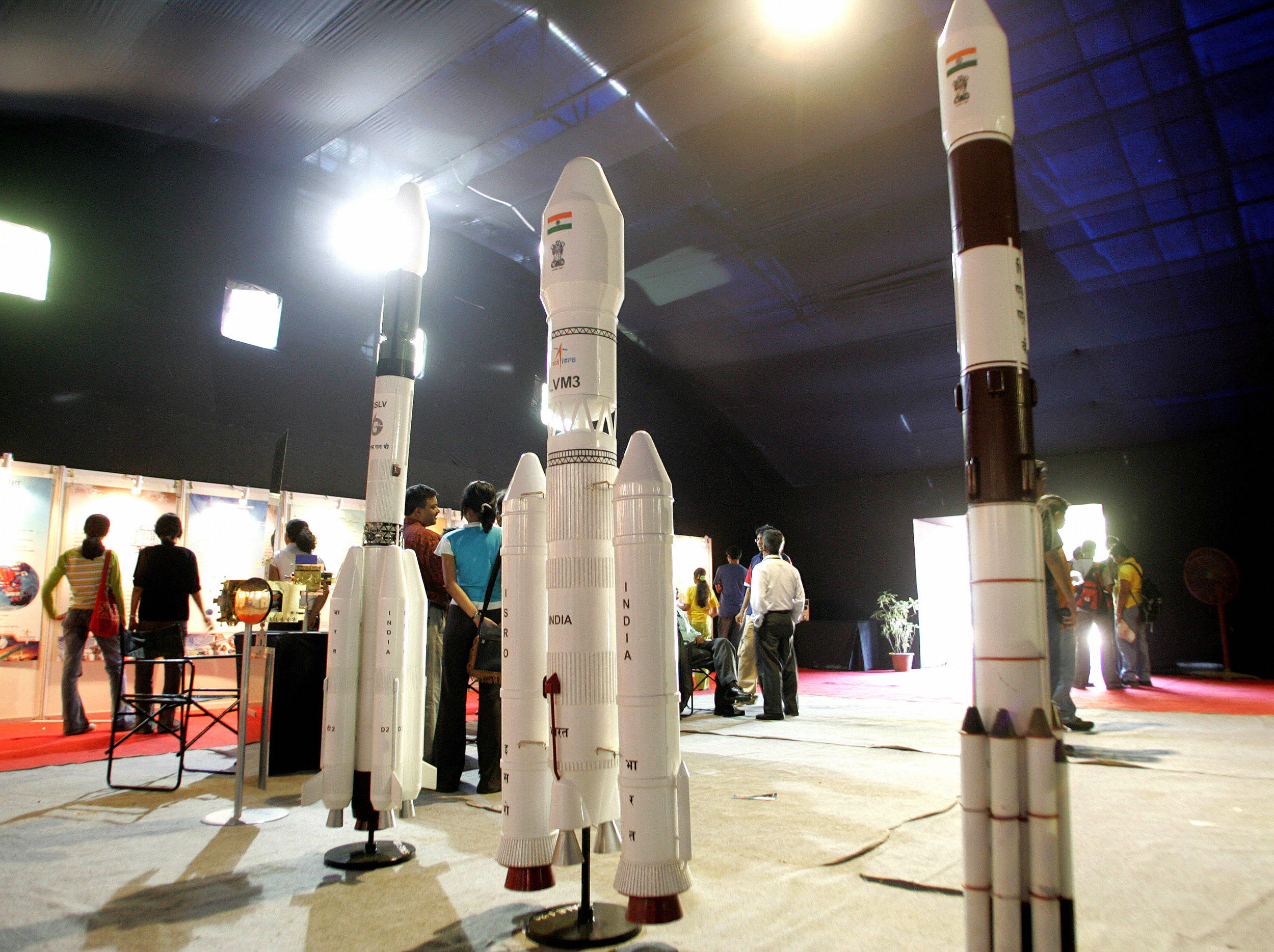
This paper examines the relationship between India’s evolving space policy and the corresponding growth in private space ventures. It analyzes both the enabling factors created by recent regulatory changes and the persistent challenges facing entrepreneurs in this capital-intensive, highly regulated industry.

Harshan Vazhakunnam

Regardless of the outcome, there’s another path to ensuring that progress doesn’t stall.

Zaur Shiriyev

But their "principal to principal" model will only be as effective as the political strength of each leader back home.

Damien Ma