

Article
The U.S.-sponsored TRIPP deal is driving the Armenia-Azerbaijan peace process forward. But foreign and domestic hurdles remain before connectivity and economic interdependence can open up the South Caucasus.
{
  "authors": [
    "Zaur Shiriyev"
  ],
  "type": "commentary",
  "blog": "Emissary",
  "centerAffiliationAll": "",
  "centers": [
    "Carnegie Endowment for International Peace"
  ],
  "englishNewsletterAll": "",
  "nonEnglishNewsletterAll": "",
  "programAffiliation": "",
  "programs": [],
  "regions": [
    "Armenia",
    "Azerbaijan",
    "Russia",
    "Europe",
    "United States",
    "Caucasus"
  ],
  "topics": [
    "Democracy",
    "Foreign Policy",
    "Domestic Politics"
  ]
}

Pashinyan meets with people in Gyumri, Armenia, on April 19, 2026. (Photo by Karen Minasyan/AFP via Getty Images)
Regardless of the outcome, there’s another path to ensuring that progress doesn’t stall.
Armenia’s June 7 election has implications far beyond Yerevan. Its outcome and the balance of forces in the next parliament will help shape whether a peace agreement with Azerbaijan and the U.S.-brokered Trump Route for International Peace and Prosperity (TRIPP) continue to move forward together—or whether both lose momentum, leaving more room for Russian influence.
In 2022, a year after the previous election, Armenian Prime Minister Nikol Pashinyan recognized Azerbaijan’s territorial integrity at a Prague summit, for the first time clearly confirming Armenia’s acceptance of the former Nagorno-Karabakh region as a part of Azerbaijan. The move represented a major shift that Armenian politics and society are still struggling to absorb. It also helped to close a decadeslong conflict that defined the relations between the two countries and shaped everything from regional energy routes and trade to connectivity and security.
At the same time, Armenia has been easing its dependence on Moscow while strengthening ties with the EU and United States through new political, security, economic, and connectivity partnerships, including TRIPP. Announced at the White House in August 2025, TRIPP would link mainland Azerbaijan to its exclave Nakhchivan through southern Armenia and onward to Turkey, potentially giving Armenia a new role as a regional transit state. Together, these changes are reshaping the regional balance and limiting Russia’s room to act as a spoiler.
TRIPP is not just infrastructure. For three decades, connectivity in the South Caucasus has been shaped by the Armenia–Azerbaijan conflict. Pipelines, railway plans, and road projects were judged not only by cost or feasibility, but by whether they strengthened one side in the conflict, bypassed the other, or entrenched a particular regional alignment. TRIPP starts from a different premise. It treats connectivity not as an extension of rivalry, but as a practical foundation for normalization. Its significance therefore goes beyond transport. For two societies shaped by war and enmity, even limited interdependence means asking the public to think differently about the former enemy.
This is why the June election is critical. Russia is not neutral in the campaign. It is backing opposition forces that want Armenia to turn again toward Moscow as its main security guarantor and challenge the current peace agreement and the foundations of the peace process.
The election is also a test of how far Moscow is prepared to go in pressuring Pashinyan’s government as Armenia moves further from Russia’s orbit. That pressure is not only political. It includes influence operations aimed at discrediting Pashinyan and stepped-up economic measures such as temporary limits on Armenian flower imports and restrictions affecting some Armenian brandy and wine producers. These moves are intended to signal that Armenia’s push toward the EU could jeopardize preferential energy terms and wider access to the Russian market.
For Armenia’s pro-Russian parties, Moscow’s pressure becomes a campaign argument in itself, suggesting that moving away from Russia carries costs for trade, energy, and economic stability. But it also exposes the limits of Russian influence. Unlike in Moldova, where recent elections left pro-Russian parties out of power but not without a substantial following, Armenia’s public mood toward Russia has shifted markedly in recent years. Moscow still has levers it can use, but they now operate in a society where broad public sympathy for Russia has sharply declined. Unless those forces remove Pashinyan from power, the question is what mandate he secures, and what that means for the peace agreement and for TRIPP.
Current polling indicates that Pashinyan’s party is likely to come out on top, although a large pool of undecided voters leaves the outcome uncertain. An outright opposition victory appears less likely but would probably halt the current peace process and weaken its prospects. If Pashinyan’s Civil Contract remains the leading force, two scenarios could unfold.
The first risk is that Pashinyan’s party wins a majority in parliament, but he falls short of the strong mandate that he needs to advance the peace process. Even now, its parliamentary majority has not been enough to move the process forward at the pace required.
Under Armenia’s current constitution, the reference to the Declaration of Independence, with its invocation of Nagorno-Karabakh’s unification with Soviet Armenia, has long been read in Baku as implying territorial claims. Yerevan disputes that reading, pointing to Armenia’s recognition of Azerbaijan’s territorial integrity and insisting that any changes to basic law are a domestic matter. Azerbaijan has nevertheless made clear that, in practice, the wording must be addressed before the peace agreement can be signed and fully implemented, leaving Armenia to navigate a politically sensitive condition. Removing it would require a referendum on a new constitution. If Pashinyan cannot secure the two-thirds parliamentary majority needed to send such a referendum to the public, Armenia may remain committed to peace but unable to institutionalize it. In this situation, the task would be to prevent the unresolved constitutional issue from freezing the wider peace process, including continued border delimitation, expanded trade and transit cooperation, and practical work on connectivity.
A second scenario—less drastic but still difficult—is that Pashinyan secures enough parliamentary backing to initiate a referendum but fails to win a majority in the later vote. A failed vote would not remove what Azerbaijan sees as the constitutional obstacle to a final settlement, but it would still leave more room for another attempt than a parliament unable to initiate the process at all.
In this scenario, Pashinyan’s task would be to keep the vote from becoming an all-or-nothing test of peace. For Yerevan, the key would be to frame the new constitution not simply as a concession to Baku, but as part of Armenia’s own state-building, regional opening, and security agenda. Practical steps on trade, transit, and border delimitation could help show that normalization brings tangible benefits before voters are asked to approve the new constitution, and preserve momentum if the first attempt fails.
Regardless of the election outcome, TRIPP offers a middle path. Even if the political track slows, the focus could shift to making the route ready as soon as possible: engineering surveys, railway design, construction of the rail link, customs and transit procedures, and the technical work needed to turn the framework into an operational route. Those steps, together with related trade openings, would keep a practical avenue open for both governments and offer a visible postwar achievement that begins to build the interdependence a peace agreement would require.
But the burden should not fall on TRIPP alone, and both parties should continue leaning into other modest changes. For example, after Azerbaijan lifted restrictions on third-country cargo transiting to Armenia last autumn, goods began moving to Armenia through Azerbaijani territory and Georgia, including Azerbaijani petroleum products. In May, Turkey also opened the Akhalkalaki–Kars railway to Armenian freight, giving Armenia another rail option toward Turkey and a potential route toward wider markets. None of this resolves the larger political questions, but it shows that limited trade and transit steps can keep momentum alive and expand economic options for Armenia, Azerbaijan, and Turkey alike.
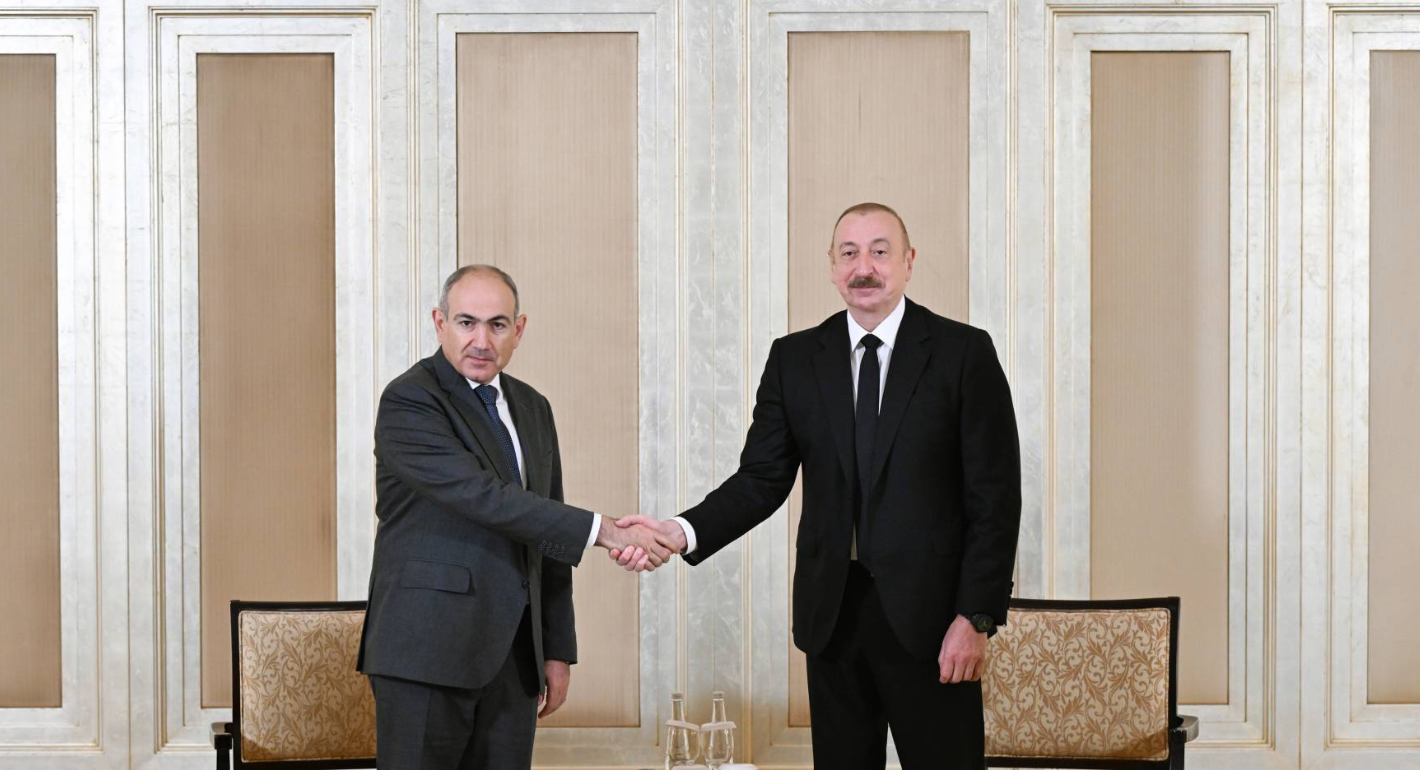
The U.S.-sponsored TRIPP deal is driving the Armenia-Azerbaijan peace process forward. But foreign and domestic hurdles remain before connectivity and economic interdependence can open up the South Caucasus.
The real danger is that both tracks stall: no progress toward signing the peace agreement and no meaningful movement on TRIPP, as domestic politics, regional pushback, or fading U.S. attention slow the process. In that case, Yerevan would struggle to show that peace is advancing at all, either through movement toward the treaty or through the practical benefits that connectivity could bring. Baku would question Armenia’s ability to deliver, while Yerevan would find it harder to sustain domestic support for the wider opening.
That is where Moscow gains. After the Second Karabakh War in 2020, Russia had two formal levers in the postwar order: peacekeepers in Nagorno-Karabakh and, under the November 2020 ceasefire statement, a security role for Russian border guards in transport links between Azerbaijan and its Nakhchivan exclave. Both have since eroded. Armenia and Azerbaijan have moved toward direct talks and a bilateral peace text that leaves Moscow on the sidelines, while TRIPP shifts the main connectivity project into a U.S.-backed framework rather than a Russian one. If the peace agreement stalls and TRIPP sees no meaningful movement, Moscow may not recover those tools in full, since neither Baku nor Yerevan is likely to welcome a return to a Russia-led framework. But it would regain what matters most: uncertainty, leverage, and room to argue that Western-backed alternatives cannot deliver.
Iran adds another layer of risk. For months, Armenian and Azerbaijani officials had tried to reassure Tehran that TRIPP would not come at Iran’s expense, as Iranian security officials see TRIPP as a hostile Western-backed presence on Iran’s northern border rather than a transport project. As a result, Tehran’s stance had become more ambivalent than outright hostile. Now, the U.S.-Israeli war with Iran has reversed that trend and hardened TRIPP skepticism in Tehran. Tehran may not be able to block TRIPP outright, but it could still slow progress by pressing Yerevan diplomatically or coordinating more closely with Moscow.
Western policymakers should be clear about what is at stake. Russia’s influence will not fade simply because Armenia turns westward. It will only diminish if the peace process proves resilient enough to survive setbacks in Armenian domestic politics and disruptions in the wider region.
That is why Western support matters. The EU, alongside the United States, should treat TRIPP not simply as a transport corridor, but as part of a wider effort to give peace a material foundation before politics fully catches up. That means moving quickly while the current U.S. administration is willing to invest political capital and resources, with the aim of making TRIPP operationally ready before 2028 rather than dependent on the same level of U.S. engagement later. The EU can reinforce that effort by financing supporting infrastructure—customs systems, logistics facilities, trade links, and railway rehabilitation—that connect TRIPP to a broader regional opening.
Armenia’s election will not settle peace or connectivity by itself. But it will decide whether there is a government in Yerevan able to endorse, defend, and sustain a peace that changes the country’s place in the region and the region itself. The harder test may come afterward: whether Armenia and Azerbaijan can keep the wider opening alive if the new constitution is delayed, fails at the ballot box, or never makes it out of the gate at all. In that case, both parties will need Western supporters to help keep trade and transit moving while building enough regional ownership to keep the process alive if outside attention fades. Without such a Plan B, a setback in Yerevan could harden into a regional stalemate: TRIPP stuck on paper, Armenia left with limited routes, Azerbaijan with fewer reasons to keep moving forward, and Russia finding familiar ground on which to rebuild leverage.
The latest from Carnegie scholars on the world’s most pressing challenges, delivered to your inbox.

Nonresident Scholar, Carnegie Russia Eurasia Center
Zaur Shiriyev is a nonresident scholar at the Carnegie Russia Eurasia Center.
Recent Work
Zaur Shiriyev


Thomas de Waal, Areg Kochinyan, Zaur Shiriyev
Carnegie does not take institutional positions on public policy issues; the views represented herein are those of the author(s) and do not necessarily reflect the views of Carnegie, its staff, or its trustees.
The conflict is threatening stability in Armenia and Azerbaijan.
Zaur Shiriyev
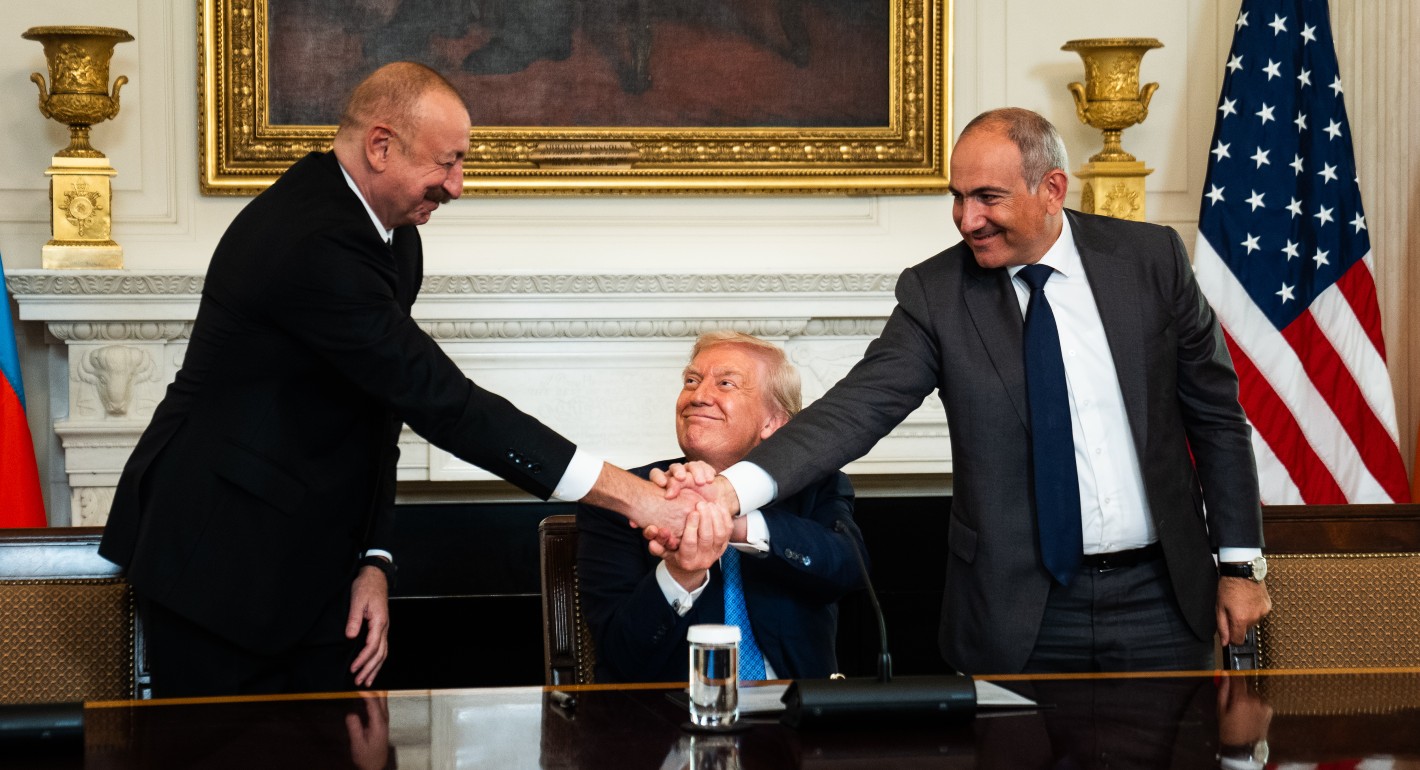
An Armenia-Azerbaijan settlement may be the only realistic test case for making glossy promises a reality.

Garo Paylan
Whether the Washington summit marks a breakthrough or distraction will depend on both leaders’ commitment to finish what they started.

Philip Gamaghelyan, Zaur Shiriyev
How Trump’s personal leadership can help formerly unwilling partners finalize the deal.
Garo Paylan
Moscow’s distraction and weakening regional grip allowed the peace negotiations to begin. But that may not last.
Zaur Shiriyev