

Commentary
Sergejs Potapkins
{
  "authors": [
    "Sergejs Potapkins"
  ],
  "type": "commentary",
  "blog": "Carnegie Politika",
  "centerAffiliationAll": "",
  "centers": [
    "Carnegie Russia Eurasia Center",
    "Carnegie Endowment for International Peace"
  ],
  "englishNewsletterAll": "",
  "nonEnglishNewsletterAll": "",
  "primaryCenter": "Carnegie Russia Eurasia Center",
  "programAffiliation": "",
  "regions": [
    "Eastern Europe",
    "Russia"
  ],
  "topics": [
    "Nuclear Policy",
    "Security",
    "EU Foreign Policy"
  ]
}
Source: Getty
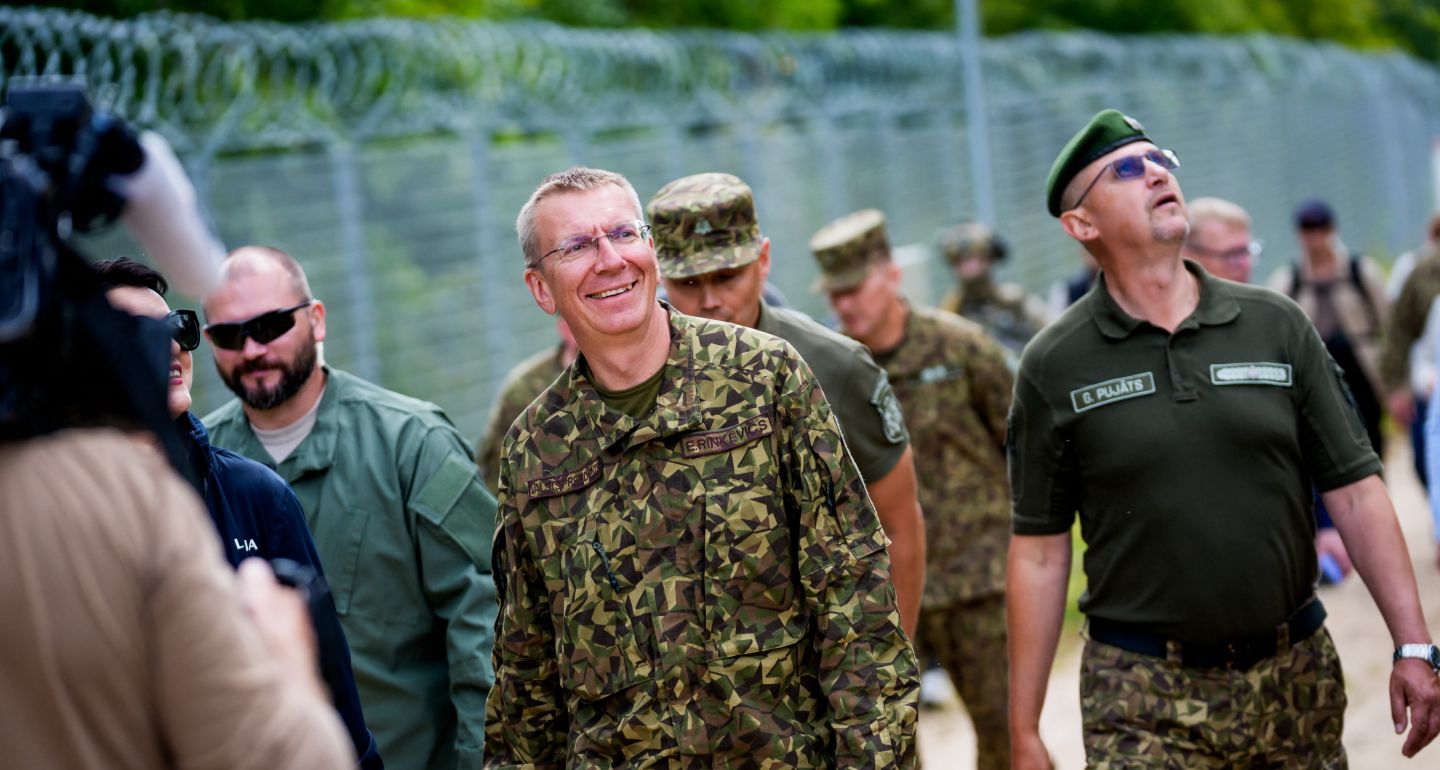
Latvia and Lithuania have been considering whether they could temporarily host NATO nuclear weapons in the event of war or a similar crisis.
Russia’s war against Ukraine continues to drive nuclear escalation between Russia and the West. Following Moscow’s stationing of nuclear warheads in Belarus, there has been talk among Belarus’s immediate neighbors of a symmetrical response.
In September this year, Latvian President Edgars Rinkēvičs said that nuclear weapons could be deployed in his country. In Lithuania, the parliament has voted to lift the constitutional ban on such deployments. Even so, there is little chance that NATO nuclear weapons will be deployed to Latvia, Lithuania, or Estonia in the immediate future.
Russia and NATO signed a Founding Act in 1997 that stated NATO had “no intention, no plan, and no reason” to deploy nuclear weapons to new member states in Eastern Europe. That established a dividing line between NATO expansion and the expansion of its nuclear presence.
Despite the many crises in relations between Russia and the West in subsequent decades, that principle was upheld. A turning point came, however, in 2022, when Moscow attacked Ukraine and used nuclear blackmail to try to limit support for Kyiv from its Western allies.
In his announcement of the full-scale invasion on February 24, 2022, Russian President Vladimir Putin emphasized Russia’s nuclear status and threatened “consequences that you have never faced in your history” to anyone who might interfere. Moscow subsequently ratcheted up nuclear tensions through threatening statements, demonstrative military exercises, revisions to its nuclear doctrine, and the deployment of nuclear warheads to Belarus.
These actions have given European governments cause to revise their own security doctrines. The restrictions specified in the 1997 Founding Act have been made obsolete by Moscow’s decision to start using its nuclear arsenal as an instrument of pressure, rather than deterrence.
That shift has been felt particularly sharply in Lithuania and Latvia, which border Belarus. Of course, as NATO members, both countries are protected by the military alliance’s nuclear umbrella. But the growing threat from Moscow is pushing them to seek additional ways to link their security to guarantees from nuclear powers.
The Baltic states fear Moscow could initiate a limited military conflict, betting that the threat of a full-scale nuclear war would deter other NATO members from getting involved. Consequently, they believe that the stronger NATO’s presence in the region, the less likely Moscow will be to pursue such a strategy.
The Lithuanian parliament’s October vote to rescind the constitutional provision prohibiting the country from hosting weapons of mass destruction or foreign military bases generated considerable attention in Europe and Russia. However, the bill has only passed its first reading (the second reading is scheduled for January 12, 2027). Even if the prohibition is lifted, any deployment of nuclear weapons would still require a further political decision.
Lithuanian Defense Minister Robertas Kaunas said back in June that there were no discussions under way about a nuclear deployment in peacetime. The lifting of the ban is only intended to allow for such a possibility in the event of war or similar crisis.
Latvia’s constitution contains no equivalent prohibition, so the debate on nuclear weapons there has proceeded without a parliamentary vote. On September 30, Rinkēvičs said that Latvia could host nuclear weapons if NATO collectively deemed it necessary. He also said there were no negotiations under way over such a deployment.
It’s clear that both Lithuania and Latvia are seriously reevaluating the parameters of their non-nuclear status—a development likely connected to some European powers altering their nuclear strategies. Doubts over whether the United States can be relied on to defend Europe, along with Moscow’s nuclear threats, have breathed new life into the idea of a system of deterrence based on Europe’s own capabilities. That would mean relying on the arsenals of the United Kingdom and France: NATO’s only European members with nuclear weapons.
In March 2026, French President Emmanuel Macron announced a program of “forward deterrence” entailing the temporary deployment of elements of France’s strategic forces to the territory of allied nations. Lithuania and Latvia were among the first to announce their intention to take part. Vilnius has also confirmed that it is involved in discussions over the deployment of U.S. nuclear capabilities.
Nevertheless, significant obstacles remain. Most importantly, are any NATO member states actually willing to move their nuclear weapons to the Baltic states? While Latvia and Lithuania may be open to this outcome, neither the UK nor France has signaled any willingness. At present, there are no agreements allowing for a nuclear deployment to either Latvia or Lithuania. Nor are there any public plans to establish the necessary infrastructure, implement safety measures, or train the required personnel to host nuclear warheads.
While the third Baltic state—Estonia—has denied it needs to host nuclear weapons, Estonian Prime Minister Kristen Michal said in September that the country was in talks to join the French deterrent initiative. In the broader Baltic Sea region, Finland and Sweden have already joined the French program—while maintaining their policy of not hosting nuclear weapons in peacetime. This shows that taking part in the Paris initiative does not necessarily mean agreeing to host nuclear weapons.
At the same time, the commitment not to deploy nuclear weapons in peacetime is primarily about avoiding escalation. In practice, if a country has decided to host nuclear weapons in a crisis, then the infrastructure needs to be built in advance. Put another way, these nations will develop a very real capability to host nuclear warheads.
It’s likely that France will soon come to an agreement to include the Baltic states in its deterrence program: Such initiatives are not usually announced only for allied requests to join to be turned down. While such participation does not mean French nuclear weapons will inevitably be moved to the Baltic states, it does create a framework for such a deployment to happen in a crisis.
Ultimately, the deployment of a nuclear arsenal to the Baltic states in the near future looks highly unlikely. There is no agreement from Europe’s nuclear powers; there are no relevant treaties; and the infrastructure is lacking. However, it’s true that the Baltic states have begun to look seriously at hosting nuclear weapons in a crisis or war. And this means there is a chance it may eventually turn into reality.
Researcher of the Latvian institute of international affairs (LIIA)
Recent Work
Sergejs Potapkins
Sergejs Potapkins
Carnegie does not take institutional positions on public policy issues; the views represented herein are those of the author(s) and do not necessarily reflect the views of Carnegie, its staff, or its trustees.
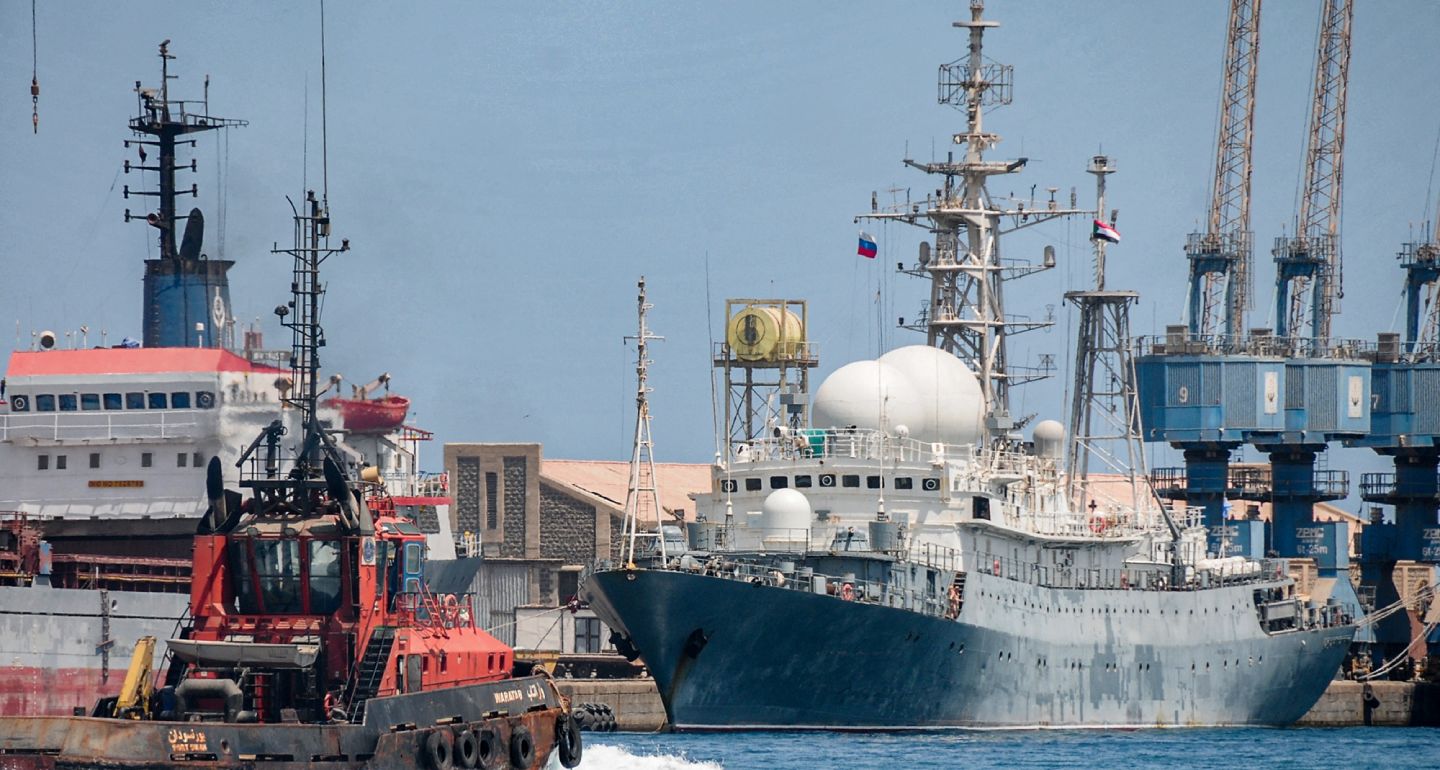
Russia’s coveted Red Sea naval base has fallen victim to its erratic foreign policy.

Sergey Konyashin
Mikhail Zvinchuk’s detention could have dealt a serious blow to Russia’s propaganda infrastructure in the Balkans. Instead, the incident has made something else eminently clear: Moscow values and protects its propagandists, while Europe still hasn’t figured out what to do with them.


Ivan Filippov, Ksenia Luchenko
Russia does not have to treat Western companies as equal partners. A centralized regime built on a foundation of oil and gas income was never going to relinquish what it saw as sovereign control.

Edward C. Chow
The pressures of war are gradually warping Russia’s system of governance, making it more vulnerable to a future crisis.

Tatiana Stanovaya
A leak of Russian gas price data helps establish that China is paying Russia far less than Central Asian countries and Gazprom’s former European customers.

Sergey Vakulenko